



7 Steps to Start Selling Wholesale and Bring in the Big Bucks!





Are you thinking about taking that plunge into selling wholesale to brick and mortar stores?
I know that wholesale can be a mixed bag. After all, why would anyone want to sell their handmade products at lower bulk pricing?
But selling wholesale can be very lucrative if you play it right.
I started selling wholesale in 2013 and by the end of the fiscal year, my wholesale orders brought in 50% of total revenue.
In other words, I doubled my sales by selling to stores.
Are you still wondering how wholesale can have a positive impact in your creative business?
Then read on:
How wholesale can take your business to the next level
Generating big orders
What I love about wholesale is that you make large orders.
Instead of selling just one item to a regular customer, you could be selling two dozen!
Wholesale orders usually total to hundreds of dollars or more, depending on what you’re selling.
Gain more exposure
Selling your products wholesale can also help expand your reach in the market.
The more stores you sell in, the more exposure you get.
Especially if these stores get tons of foot traffic!
I’ve had plenty of retail customers tell me they found my website because they saw my jewelry in their local store.
Builds credibility and trust
When you start getting into the wholesale business, you also automatically gain instant credibility.
Your peers, competitors and current customers will perceive you as being professionally in business.
You’re no longer running a hobby. It’s for real now!
Consistent paychecks
And if you’re sick of wondering when your next sale is coming in, wholesale can generate more consistent paychecks for you than selling retail on Etsy.
If a store sells your product well, you can expect them to keep reordering from you.
Especially during peak seasons like the Valentine’s Day, back to school and the holidays!
Easy to make the sale
Wholesale orders are also a lot easier to obtain, provided you have an effective strategy for selling!
It’s pretty straightforward, just email the store owner or buyer with your pitch.
Keep following up until they say no!
Grows your business
Last but not least, wholesale grows your business in life changing ways.
You’ll start to ask yourself tough questions like these that are imperative for scaling up:
- How can you lower your costs so you can make more profit?
- Where can you source for better priced materials?
- How can you streamline your production process so you’re working less?
- Where and how can you create systems to be more efficient?
I doubt you need any more convincing, so let’s get straight into the 7 steps to start selling wholesale and bring in the moolah!
1. Take charge of your pricing
Before anything else, your pricing must be able to take the hit.
Stores expect your products to be priced at least 50% lower than your regular retail prices.
Store owners need to make a profit too and expenses pile up quickly when running a brick and mortar.
If you want a store to keep ordering from you, give them a reason to be happy to work with you by making them money!
So take a good look at your products and what it costs to make them.
Can you afford to sell wholesale? If not, how can you lower your costs?
Consider purchasing materials in bulk, streamlining your production process and maybe even outsourcing help.
2. Setting up your program
Next, you’ll have to think about what policies you want in place.
Stores will ask this a lot: What is your minimum opening order?
This is the first order they make from you.
Set this dollar amount based on how many pieces it’ll take for the store to display your work nicely on their shelves.
Also, what would make dealing with a wholesale order worth your time?
My minimum opening order is $150, or 12 pieces.
What is your minimum reorder?
This is usually a lower number – mine’s $100.
Also, how will you support your stores?
How will you handle exchanges, refunds and damaged goods?
How much is shipping, and who will pay for it?
3. Photograph your products on white
You must have clear product photos of your line on a white background.
This is not only the standard, but it’s a lot more professional and showcases your products without any distractions!
Having great photos are absolutely necessary when creating your linesheet. 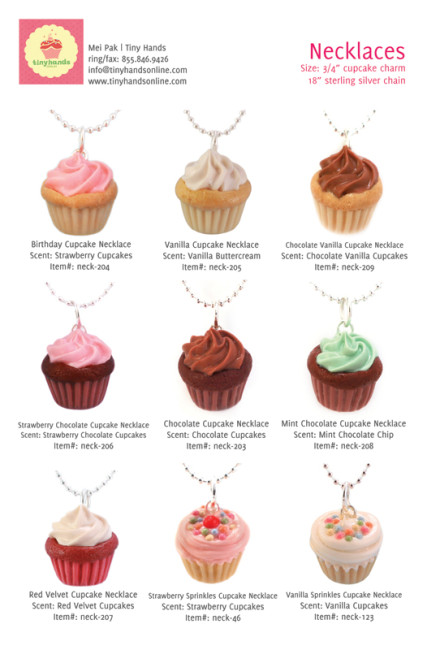
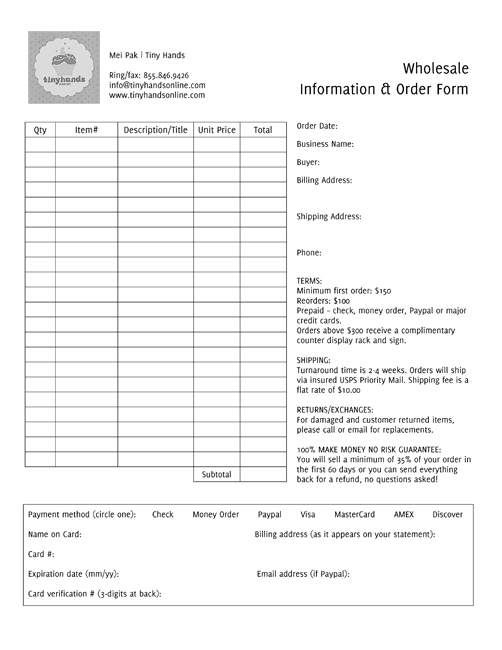
4. Creating your linesheet and order form
A linesheet is a catalog that displays all the products you have for sale along with wholesale prices and product IDs or names.
Don’t make linesheets overly complicated.
Stores expect them to be plain and simple.
You can create your linesheets using Microsoft Word by using tables and then changing the color of the table’s border to white so the lines don’t show up.
If you’re into fancy programs, Adobe Photoshop or InDesign also work!
There are paid online services that help you make linesheets, but I prefer to make them myself since it’s a fairly easy process.
Stores will also expect an order form that they can fill in and either fax or email to you.
I made mine in Microsoft Word and turned it into a PDF.
I also included my policies on the order form, so the store owner can easily reference them!
Bonus: [thrive_2step id=’5222′]Download my free editable wholesale order form template[/thrive_2step] to go with your linesheet!
5. How will you package your products?
Almost as important as the product itself is the packaging.
Even if it’s a hang tag, how you choose to package your products for display can make your work so much more appealing to a store’s customers.
You may or may not require packaging for each individual item.
But if you’re selling soap, stationery or sets of coasters (to name a few), you’ll almost definitely want to think about how you’re going to package them for the shelves.
The packaging you use for selling to your own retail customers will normally be different than what you use to send to stores. 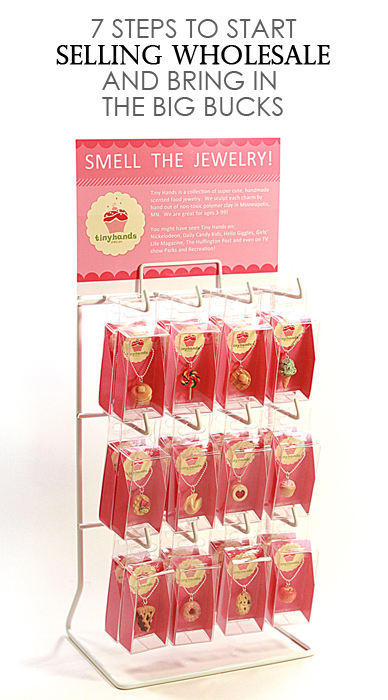
6. Searching for the right stores
At this point, you’re ready to start hunting down some stores!
I almost always search for stores online.
First you need to determine what type of store your products will sell well in.
Jewelry stores? Gift shops? Greeting card stores?
Then head over to Google and type in the type of store + your location or where you want to sell.
Start compiling a list of store names, websites, email addresses and phone numbers!
7. Emailing your pitch and follow up
Now it’s time to make the sale!
In less than 10 sentences, state who you are, what you do, why you’re emailing and why your products would sell well in their store.
If you don’t get a response in a few days, email again with a follow up asking if they would like a sample (if you can afford one) or if you can schedule a meeting (if you’re in town) or if they have any questions.
While you definitely want to only contact stores that are a good match for your creations, sometimes this can be a numbers game.
The more stores you email, the higher your chances of making a sale.
Once you’ve established a working relationship with a store owner, it becomes a lot easier to ask for the sale again when it’s time to reorder!
Download your free editable wholesale order form template
[thrive_2step id=’5236′] [/thrive_2step]

Unlock a Profitable Handmade Business
in Just 12 Weeks Without Using Etsy
or Social Media



FREE WORKSHOP
This workshop is for anyone who makes and sells a handmade or physical product, including jewelry designers, artists, paper designers, bath & body product makers and more!
What You'll Discover
The #1 mistake people make with Etsy & social media that causes shops to FLOP
The secret to making it with your handmade shop so it's no longer just a hobby
How to make sales in your handmade shop with ease so you can finally get to 6-figures
TAKE ME THERE






Your email address will not be published. Required fields are marked *