







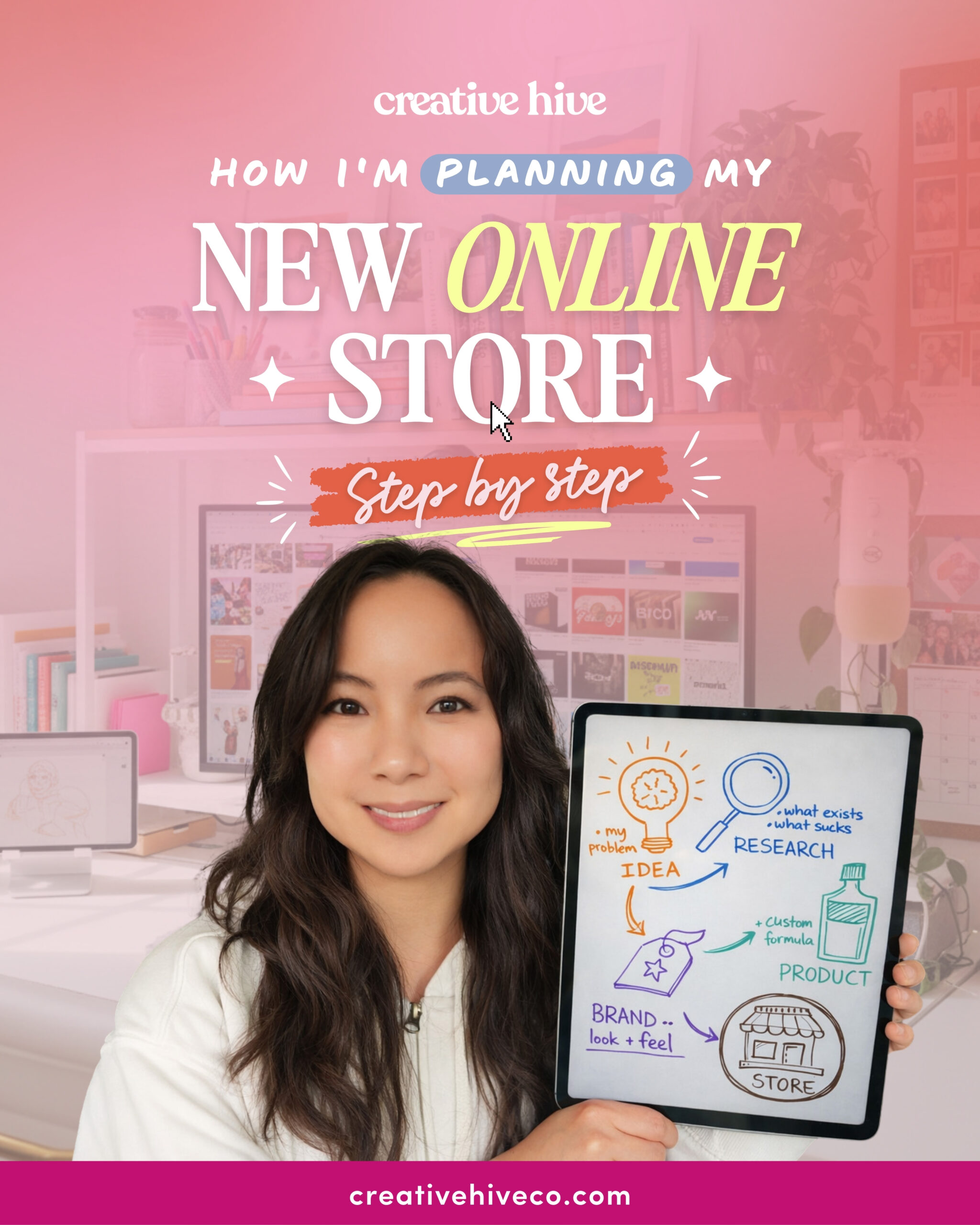
I’m planning a brand new online store from scratch, and I’m walking you through the exact steps I’m taking.
This product idea is very different from my usual businesses.
I’m going to show you exactly how I move from idea to real product, how I validate it, how I make decisions, and how I execute.
I’ll also share the mistakes I’m intentionally avoiding this time, based on everything I’ve learned from building multiple 6 and 7 figure online stores.

Ideation
The first thing to start with is the product idea.
Usually, I look for a problem I personally deal with or one I see other people struggling with. The best ideas tend to come from real frustration.
This time, the idea came from my own ongoing struggle with sleep.
I’ve dealt with sleep issues for years. I’ve tried just about everything, including:
- Different supplements and vitamins
- Blue light blocking glasses
- Improving my sleep hygiene and creating relaxing pre-bed routines
- Eye masks
I’ve also tried melatonin, but even at a 0.5 mg microdose, it made me feel depressed. So that was out.
At some point, after nothing really worked the way I wanted it to, I created my own personal “cocktail” of vitamins that I now take every day.
It’s the only thing that’s consistently helped me sleep better.
And for me, sleep isn’t just about feeling rested.
It affects everything, my emotional health, how regulated my nervous system feels, how productive I am during the day, and honestly, just how happy I feel overall.
When my sleep is off, everything feels harder. When it’s solid, everything works better.
There are a few reasons I want to get into the supplements business.
First, I genuinely love biohacking.
Optimizing your mental and physical performance in the most natural way possible. I definitely get that from my dad.
We believe that we can usually create everything our bodies need by ourselves, with proper nutrition.
But let’s be real, deficiencies happen.
Modern life isn’t perfect and sometimes you need support to hit the daily minimums of certain vitamins and nutrients to actually function at your best.
The second reason is more strategic: recurring revenue.
It takes real effort and money to acquire a new customer.
But in a supplements business, if the product genuinely works, repeat purchases are natural.
People reorder because they feel the difference. That kind of built-in retention is powerful.
And then there’s the market size.
The revenue ceiling in this industry is high. This isn’t a tiny niche with limited upside.
It solves a real, tangible problem that millions of people deal with like sleep, stress, energy, focus.
I truly believe this has the potential to become a multi-million dollar business.
Now that I have the product idea, the next step is the business name.
Once that’s locked in, I can secure the domain.
I’m considering using a .store domain for this brand because it immediately communicates what the business is.
When someone sees your URL, they know they’re going somewhere to shop, not a blog, not a portfolio, not a random landing page. It’s clear and retail-focused from the start.
Domain extensions like .store were created specifically for ecommerce brands.
Even well-known names like MrBeast and Michelle Obama have used .store domains for product-focused launches because it makes the purpose of the site obvious right away.
Another big reason I like it is availability.
With .com, most short, clean brand names are already taken. That usually forces you to add extra words, hyphens, or awkward variations.
With .store, you’re much more likely to get the exact brand name you want, simple and clean.
If you’re interested in getting your own .store domain name and grab the free bonuses they’re offering here: https://go.store/ch2
And use my code CREATIVEHIVE to get your own domain for only 99 cents for the first year.
Research
I know a lot of people struggle with sleep. And because of that, there are already countless solutions on the market.
It’s competitive, you could even say saturated, but that’s true for almost any niche worth entering.
For a while, that honestly made me nervous and it dampened my excitement a bit.
When you see how many players are already in the space, it’s easy to question whether there’s room for you.
But I’m choosing to move forward anyway because this connects directly to my why.
I strongly believe in diversification. As a self-employed person, relying on a single revenue stream is risky.
If the landscape shifts, algorithms change, regulations tighten, or consumer behavior moves in a different direction, your entire income can take a hit overnight.
You need a fallback and you need multiple streams.
This is how I think about building wealth.
I have specific financial goals I want to reach.
We may want to start a family soon and renovate our home.
I want to buy my parents a house in Malaysia because right now they’re renting, and there’s always that uncertainty that the landlord could ask them to leave. They deserve stability and a good quality of life, and they’re not getting any younger.
So I ask myself: how can I generate significant income in a relatively short period of time?
There are real milestones ahead of us that require real money.
Real estate is a long game, and it’s not my strength. Business is where I have experience, skill, and leverage.
So instead of spreading myself thin in areas I’m not great at, I’m choosing to go deep and wide in business.
And when I look at this opportunity through that lens, the competition doesn’t scare me the way it used to.
I always tell my students that competition isn’t a bad sign, it’s proof there’s demand. If no one else is selling something similar, that usually means there’s no real market for it.
Seeing competition is a good thing. It just means people are already spending money trying to fix this problem.
The real question isn’t, “Is there competition?” It’s, “How am I going to use it?”
It’s normal to feel discouraged when you see a crowded space.
But competition is actually free research, it shows you what’s working, what’s popular and more importantly, where the gaps are.
Because I’ve personally tried so many sleep products, I’ve experienced those gaps firsthand.
I’ve tested gummies, powdered drinks, tonics you mix before bed and a lot of them taste terrible.
That weird, artificial vitamin flavor makes it hard to take consistently. And when something feels unpleasant, you stop using it.
It’s also inconvenient to mix a drink every night. What if you’re traveling? What if you don’t have access to hot water? What if you just don’t feel like preparing anything?
There are a lot of people who don’t mind the weird vitamin taste, but my product will be for people who do care about flavor and want something easy to consume.
Another factor is that it’s scientifically proven that eating close to bedtime can disrupt sleep, affect metabolism, and even make you hungrier the next day which can lead to weight gain.
The point is, even though there are plenty of ways to tackle sleep, not all solutions are created equal.
This is exactly why looking at the competition is so valuable: it helps you identify gaps and figure out how your product can stand out or even be better than what’s already out there.
To summarize:
1. Start with the idea.
2. Use the competition to see where there is a gap in the market.
3. Come from a perspective where you are your own customer.
When you have firsthand experience of those problems and the nuances behind the solutions you’re seeking, it makes this work a lot easier.
This is how you create a high-quality product and offer that can last for years.
Now, here’s another way I can stand out and I’m spending a lot of time here because laying this groundwork now makes marketing and sales so much easier later.
In the sleep market, melatonin has been the go-to solution for years.
But many people are moving away from it because it feels forceful and aggressive.
That opens the door for something different.
I see a huge untapped opportunity in Asian medicine.
While traditional Chinese medicine is one approach, it wasn’t what helped me personally.
Instead, I turned to an Ayurveda-backed method, which primarily uses South Asian herbs.
My goal is to create a proprietary supplement that blends both Western and Eastern herbs for people who share similar constitutions and sleep challenges as I do.
In short, I’m building the product I wish already existed in the market.
Now, in my research, I also want to get a sense of the average price point for my product and similar health-based products to establish a baseline.
I’m not just looking for the cheapest option, price isn’t the only factor people consider when shopping.
I also pay attention to the highest price point from successful businesses.
I like to“coattail”off businesses that are already winning. Success leaves clues.
I’m not saying I’ll copy them exactly, but I do want to understand whythey made certain decisions, and then apply that same thinking to my own business.
If you want a full roadmap for setting up your own business from scratch, the way I’m walking through here, I cover all of this in my free workshop.
I break down the exact system I use to build profitable online stores that don’t take years to figure out, so you can start making sales from day one.
Head to this link: https://tinyurl.com/2w92vvts
Product Development
The next step is contacting labs or companies that can handle the custom formulations for my supplement.
Since this is primarily Ayurveda-based, it actually helps narrow down my research.
To find partners, I can Google keywords like “Ayurveda custom formulation products” and work through the list of companies that come up.
I can also tap into leads from my network, such as friends who have gone through Ayurveda certifications.
One friend referred me to an Ayurveda doctor she used to see in Los Angeles, and another friend who recently got certified is helping me look into different leads.
When it comes to selecting a partner for product development, I am paying attention to:
1. Capability
I’ll provide an initial list of ingredients and specific herbs I want to include and why. If a company cannot carry those specific items, they are automatically removed from my list.
2. Pricing and Terms
I’m interested in the cost per bottle or cost per pill, but I’m especially focused on the Minimum Order Quantity (MOQ).
At this stage, it’s not just about the cheapest cost per unit.
I want to keep the business lean because it’s risky, and I don’t want my cash tied up in inventory that may not sell.
If a company has a much lower minimum than another, I would consider them first, even if their cost per unit is higher.
Beyond that, I also care about what a company can offer for really large orders.
On the upside, if my business really does well, I want to know how much profit I could optimally make in the long term.
If I’m ordering 10,000 bottles, I want to know if I can get a good price.
Profit Margins and Economic Feasibility
Generally speaking, I’m aiming for a 4x profit based on the cost of the product. This cost should include:
(a) The cost of supplies
(b) Shipping to me or a fulfillment center
So if one bottle costs $10 to make and ship, then I need to sell it for at least $40.
A 4x profit is the bare minimum I would look for because there are so many other costs to running a business, such as:
- Overhead costs (admin and legal fees)
- Running a website
- Marketing (which is a significant cost)
- Building a team
- Fulfillment costs
- Discounts or sales throughout the year
If I can’t get that margin at the starting point, I’d like to aim for it within the first year.
Initially, you may not be very profitable because you’re ordering smaller minimums and there are higher upfront costs for a lab to make a new formula for you.
Having this margin gives me more freedom to grow a team, scale the business, and invest in marketing.
It’s also more forgiving and gives me a longer runway to build the business.
This is super important, the economics have to make sense, or you don’t have a business.
So you see how I’m balancing both short-term and long-term considerations.
I’m weighing each factor equally, rather than focusing exclusively on short-term or long-term gains.
White Labeling vs. Proprietary Formulas
In the supplement business, there’s a lot of “white labeling.”
That’s basically when a company already has a pre-made formula, and all you do is slap your branding and packaging on it.
While that’s definitely an option, I’m choosing not to go that route and there are two big reasons why:
- I have very specific requirements for my formula.
- It doesn’t help with long-term competition.
If my product can be easily copied and sold by someone else, I have no real “moat”. A proprietary formula is what protects me and my business. I need something that’s truly mine.
Yes, skipping white labeling makes things harder at the start.
But in the long run? It’s a huge asset.
Owning my formula gives the company something no one else can replicate, and that’s priceless when it comes to building a sustainable, competitive business.
Sampling and Testing
Once I speak with these manufacturers, I’ll hopefully narrow it down and move forward with three to five different companies.
The next step after that is getting samples.
I’ll be my own guinea pig and test them myself to see if the formula actually works.
As you can imagine, this is a multi-month process that happens long before we ever launch the business or put up a website.
That said, I’ll be looking for ways to condense the timeline as much as possible without compromising the quality of the product.
I think the part that will take the most time is testing the products themselves, because I’m not willing to sell something I know doesn’t work.
There will likely be several iterations, so I need to be very clear about the ingredients I want upfront.
That way, we don’t waste unnecessary time going back and forth refining the formula.
To save time and increase my confidence in the product, I can also share it with friends.
Some of my neighbors already struggle with sleep like I do, and they’ve said they’d be happy to test it for me.
At this stage, I’m not aiming for perfection or the absolute best product on the market just yet.
I’m aiming for something I genuinely feel confident works for me and can work for others too.
It’s about hitting a strong “good enough” standard in the beginning.
I want to be able to stand behind the promises I make.
If I say this supplement helps you fall asleep faster and improves sleep quality, the product needs to truly support that claim.
After I launch and start making sales, feedback might reveal new insights, for example, maybe some people experience very vivid dreams.
If that happens, I can go back to the manufacturer, refine the formula, and address that issue.
Launching doesn’t mean it’s final.
I always have the option to improve and adjust the product even after it’s live.
Branding & Packaging
The next step is branding and packaging.
I have a very specific vision for what I want this brand to feel like, but I don’t yet know exactly what that looks like visually.
And I think a lot of creatives starting a business can relate to that, you have a general direction in mind, but the visuals aren’t fully formed yet.
That’s completely normal.
Here’s how I would approach it:
1. Define the Brand Identity
I want the brand to feel modern, accessible, and friendly.
Because it’s Ayurveda-based and I’m Asian, I want there to be an Asian influence in the branding.
I also want this brand to attract people like me, creative individuals who might be anxious, type A, or neurodivergent.
People whose brains run a little differently and who are constantly thinking.
2. Create a Visual Vision Board
Once I have those keywords, I can go to Pinterest or Google Images to research similar vibes.
I’ll look for motifs, designs, fonts, and colors that represent that vision. I’ll collect these images on a Pinterest board so I have a visual representation of the brand.
3. Hire a Branding Expert
I’ll take that vision board to a branding expert.
Prices can range anywhere from $50 on Etsy to over $10,000 for a boutique agency.
I’m not looking for either extreme, what I want is someone who can translate my vision into something beautiful and distinctive, most likely a strong freelance designer rather than a high-end agency.
(a) I’ll specifically look on Behance. It’s a portfolio platform where artists and designers showcase their past work, and you can search by keywords to find styles that match your vision.
(b) I’d budget between $2,000 and $3,000 for a project like this.
That’s higher than what I’d normally spend, but in the supplement space, branding and packaging matter just as much as the product itself.
They’re what help you stand out and ultimately drive sales.
So I want to invest as much as I reasonably can to make sure it looks exceptional.
4. The Design Process
When you’re starting the branding process, you can give the designer the vision board you’ve already created.
That becomes the foundation for everything.
(a) Initial Concepts: They’ll usually come back with three to five different concepts. Ideally, these concepts should feel very distinct from one another so you can clearly see different directions the brand could take.
(b) Refinement: Once I choose the concept I love, the designer will create three to five variations of that specific direction based on my feedback. This is where we fine-tune the details.
(c) Final Assets: After the logo is finalized, they’ll develop the full set of brand assets, packaging design, website visuals, color palettes, fonts, and multiple logo versions (black and white, text-only, horizontal, square, etc.).
5. Packaging Regulation
When it comes to packaging especially since this is a consumable product, there are a few extra layers to consider.
(a) Compliance: I’ll need to research FDA regulations to make sure all required information is included on the label and that everything stays compliant.
(b) Coordination: Much of that required information will come directly from the manufacturer and the finalized ingredient list, so there will need to be close coordination to ensure accuracy.
If you’re wondering whether I need a special medical license to sell supplements, the answer is no.
I don’t need one because I plan to have the product manufactured by a licensed lab.
Supplements are regulated as dietary supplements, not as drugs, so they don’t require FDA approval before being sold.
Building a Website
From there, I’ll start building out the website.
This is where something like a .store domain comes in handy once I’ve settled on the business name.
I’ll probably use Hostinger or Shopify to get the site up and running.
It shouldn’t take too long, maybe a weekend to a week but I also need really good product photos and videos.
I’ll go back to Pinterest for inspiration, then figure out any supplies I need for the shoot, like props or backdrops.
The actual shoot will probably just take an afternoon.
I might outsource the editing to someone on Upwork since it’s time-consuming and honestly, I’m not great at it.
My plan is to focus on what I do best and outsource the rest.
Marketing
Next, we need to think about generating traffic, because without traffic, there won’t be any sales.
My plan is to focus on two main forms of marketing, the same strategies I’ve always talked about in my videos and courses:
1. Influencer and Media Outreach
(a) I want to create a curated list of influencers and media outlets that cater to people who struggle with sleep or are interested in supplements.
(b) I’ll use them as beta testers to get feedback that can help me refine the product or the marketing.
(c) Ideally, I want their positive feedback to serve as social proof on the website. This builds trust and makes other potential customers more likely to buy.
(d) These influencers can become evangelists, helping spread the word to their audiences.
I might use platforms that make it easy to reach a bunch of influencers at once, though those usually come with a cost.
I also have a marketing assistant who handles media outreach for Tiny Hands, my first jewelry shop, so she already knows the process and can help me manage this efficiently.
2. Paid Advertising
(a) I can also use paid advertising on Meta and Instagram.
(b) I’ll probably start there first, then add TikTok, Google, and YouTube ads later.
I already have a team I trust from my existing businesses who can help create the ads for me.
I know I’ve only just scratched the surface on media outreach here.
It’s what I recommend everyone focus on instead of social media, especially if your marketing budget is small.
Why spend all your time building followers one by one, knowing your content will only ever reach 1–5% of them, when someone else can market to an audience they’ve already spent years building?
I have another blog where I go much deeper into how this actually works, why it’s still underused, and what it looks like in practice, beyond just sending a few emails.
Just click this link: https://tinyurl.com/c7927ze5
Starting a brand new business from scratch can feel overwhelming, especially if you’re not sure where to begin. Even if you’re stuck wondering how to take the first step, this is proof that you can break it down into manageable pieces and make decisions along the way.
Think of this as a roadmap you can follow or adapt for your own business. Every small step moves you closer to turning your idea into reality.


Unlock a Profitable Handmade Business
in Just 12 Weeks Without Using Etsy
or Social Media



FREE WORKSHOP
This workshop is for anyone who makes and sells a handmade or physical product, including jewelry designers, artists, paper designers, bath & body product makers and more!
What You'll Discover
The #1 mistake people make with Etsy & social media that causes shops to FLOP
The secret to making it with your handmade shop so it's no longer just a hobby
How to make sales in your handmade shop with ease so you can finally get to 6-figures
TAKE ME THERE






Your email address will not be published. Required fields are marked *